
Learn about the latest innovative programs and news related to older adult behavioral health.
OCEBHA Resources
OCEBHA Equity Framework (PDF)
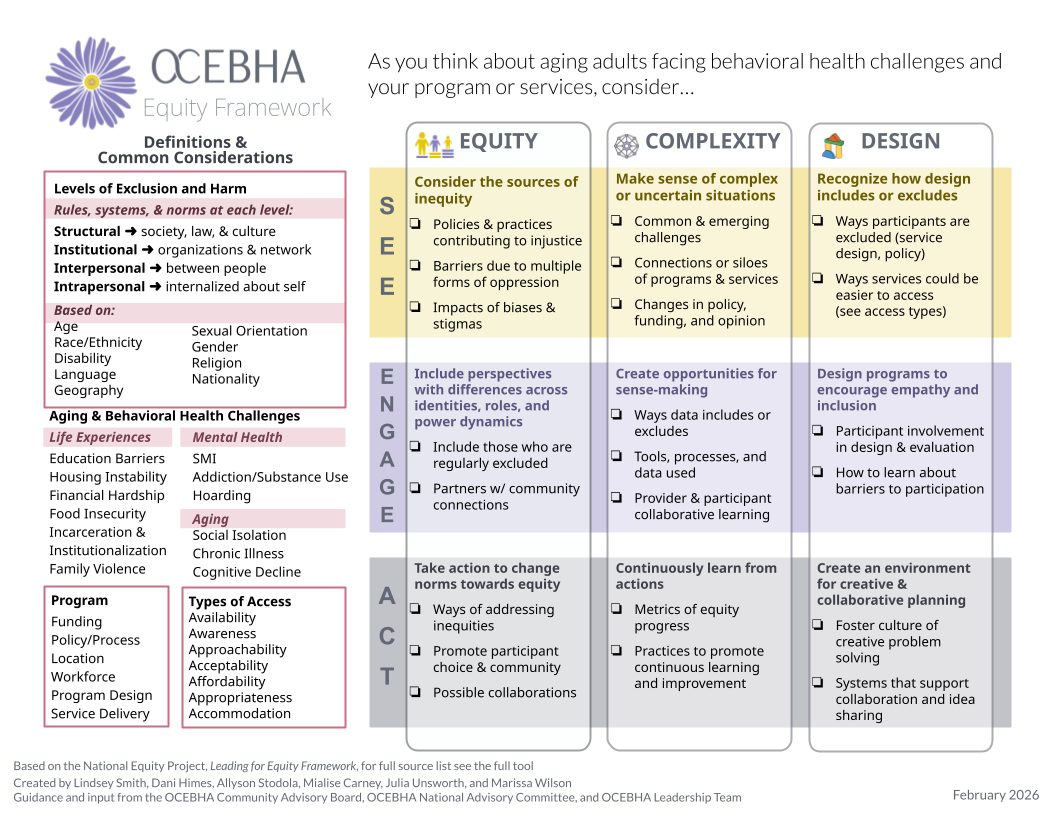
The OCEBHA Equity Framework provides a structured approach to addressing inequities in aging and behavioral health services, emphasizing inclusion, accessibility, and continuous learning. It outlines key considerations such as policy barriers, systemic biases, and collaborative solutions to create more equitable and inclusive programs.

This presentation will walk you through the OCEBHA Equity Framework, step by step. We’ll begin by looking at the full framework on the next page, then break it down into key sections. The accompanying reference guide follows along with each section and includes reflection questions to help you consider how the framework connects to your work—and how you can begin incorporating it into your programs, policies, and daily practice. Use it individually or with teams to reflect, plan, and design more inclusive, person-centered approaches.
Workforce Readiness Assessment

The Oregon Center of Excellence for Behavioral Health and Aging (OCEBHA) developed this Assessment Tool to provide a framework for aging services, behavioral health, and primary care providers to ensure their workforces are prepared to deliver quality, evidence-based, and informed behavioral healthcare for older adults.
The Oregon Center of Excellence for Behavioral Health and Aging (OCEBHA) developed this Assessment Tool to provide a framework for aging services, behavioral health, and primary care providers to ensure their workforces are prepared to deliver quality, evidence-based, and informed behavioral healthcare for older adults.

Quarterly Newsletters Archive
OCEBHA's Quarterly Newsletter archive highlights key topics related to behavioral health and aging, with special emphasis on emerging research and innovative programs that address the behavioral health needs of older adults.

Monthly Newsletters Archive
Each month, we send out a brief newsletter highlighting some of the last month’s important news and applicable research in behavioral health and aging, and events and opportunities for the upcoming month.

Older Adult Behavioral Health Screening Tools for Clinicians
This resource contains a set of screening and assessment tools that may be used by professionals who work with older adults who may have behavioral health needs, such as depression, agitation, etc.

Toolkit to Support Caregivers of Older Adults with Behavioral Health Needs
This toolkit is designed specifically for caregivers and clinicians who support older adults living with serious mental illness. This toolkit includes Oregon-specific and national resources and may be useful for caregivers and clinicians locally or nationally.

Addressing Social Determinants of Health: Behavioral Health and Aging Toolkit
This Social Determinants of Health (SDOH) Toolkit supports systems-level action to address behavioral health disparities among older adults. It provides health departments, policymakers, aging services, and cross-sector partners with frameworks, data, and tools for equity-focused planning.
Innovative Programs

Oregon Older Adult Behavioral Health Initiative
The Behavioral Health Initiative for Older Adults and People with Physical Disabilities, funded by the Oregon Health Authority, has professionals who specialize in behavioral health for older adults and people with disabilities in local and regional community mental health programs around the state.
Promoting Older Adult Wellness and Evidence-Based Resources in Oregon
OCEBHA's 3-year grant awarded by the ACL will increase the number of older adults and people with disabilities in Oregon participating in structured evidence-based CDSME and self-management support programs to address behavioral health challenges like depression and substance use disorders.

Oregon Geriatrics Workforce Enhancement Program (GWEP)
Oregon GWEP is a collaborative education and partnership program designed to improve knowledge and skills around older adult care. We work with primary care teams and the community to increase their confidence to provide age-friendly care. Funding runs through June 2029.